How to Help Dogs of Different Ages Get Along
I work with many clients who have multi-dog households. And often these households consistent of dogs of different ages. Many peopler get a new puppy or adopt a young dog when their existing dog is older.
I myself recently adopted a young, athletic 3 year old dog into my home with an 11 year old dog who has arthritis and a few other chronic health conditions.
There can be a lot of positives to this type dynamic with dogs of different ages sharing a home IF there are certain things in place to help set the dogs up for success. A young dog may have more interest in playing rough and doing other high energy activities throughout the day. An older dog might not have this interest or level of energy anymore.
They can still live happily together.
Dogs of different ages don’t need to have the same energy levels, interests, or social preferences. They also don’t need to spend all of their time together.
A big part of making a multi-dog household work (especially with an age gap) is recognizing that there are things we should be proactively doing as the humans to help them be successful.
Here are four things I recommend.
1. Make sure they each get the physical exercise they need
Dogs have different exercise needs, and age can be a big factor in this. A young, energetic dog may need significantly more physical activity than a senior dog. An older dog may still need exercise, but they often benefit from slower paced, shorter opportunities to exercise more often (such as a few short sniff walks a day vs a long 5 miles walk).
This can become a problem if the dogs are not getting the exercise amount that they specifically need. If the older dog has a lot of extra energy to burn, they will likely pester the older dog with play attempts. And even if the older dog likes to play, it is very common for them to not need/want as much rough play as the younger dog.
Make sure your younger dog has appropriate outlets for their energy so they aren’t constantly relying on your older dog for exercise and entertainment.
This can go beyond exercise we typically think of such as long walks, runs, or playing fetch.
Mental enrichment, sniffing, training, and opportunities to explore can be just as effective for some dogs.
Your dogs may need completely different activities to feel satisfied at the end of the day. This is normal.
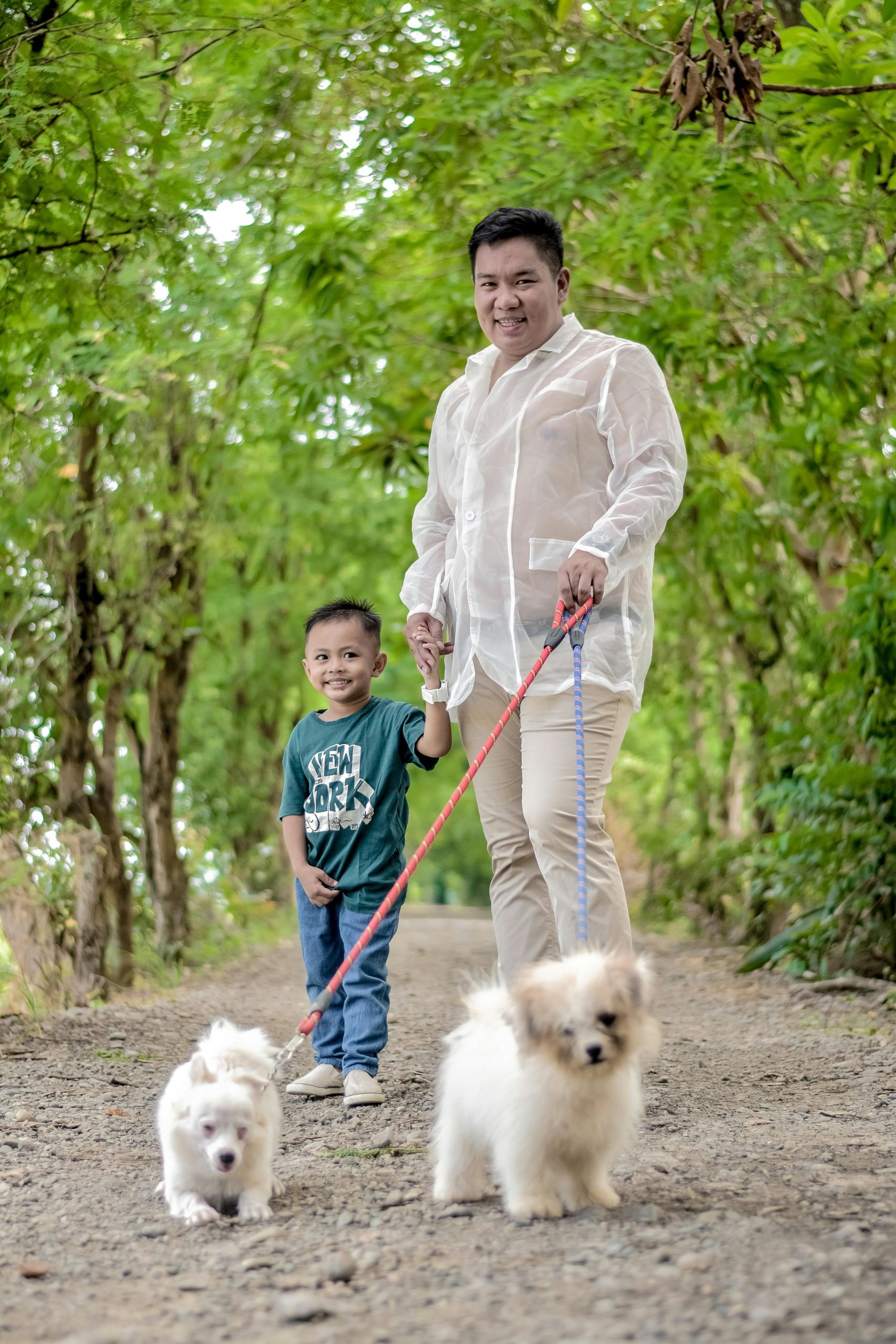
For example in my current home dynamic, my dogs both get to go on a sniffy walk together every day. Then, on most days, I also get my younger dog out for a leash jog or an additional walk to help burn his energy. This way, he feels satisfied and their wrestle time stays enjoyable for both dogs.
2. Monitor play and teach skills that help both dogs enjoy it
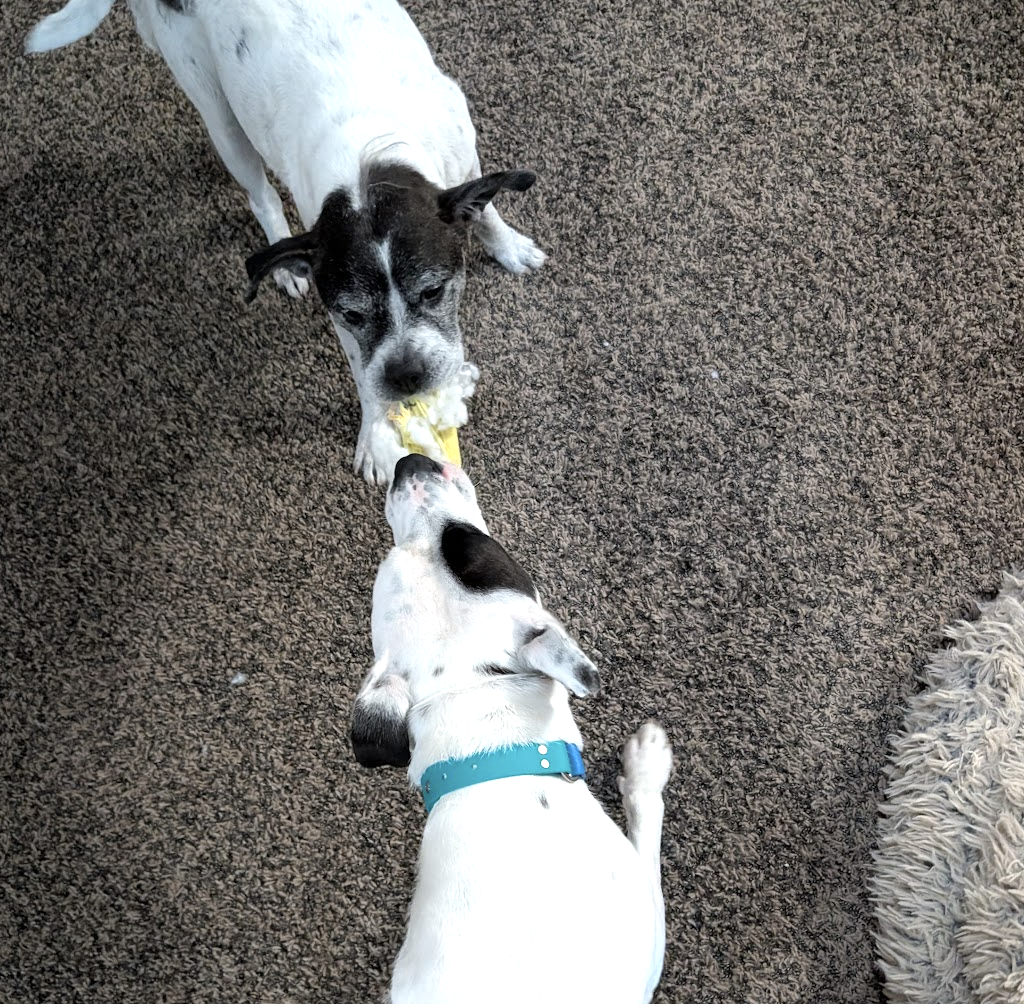
Sometimes dogs of different ages genuinely enjoy playing together.
Great! Let them play.
Just make sure you’re paying attention to whether both dogs are actually enjoying the interaction.
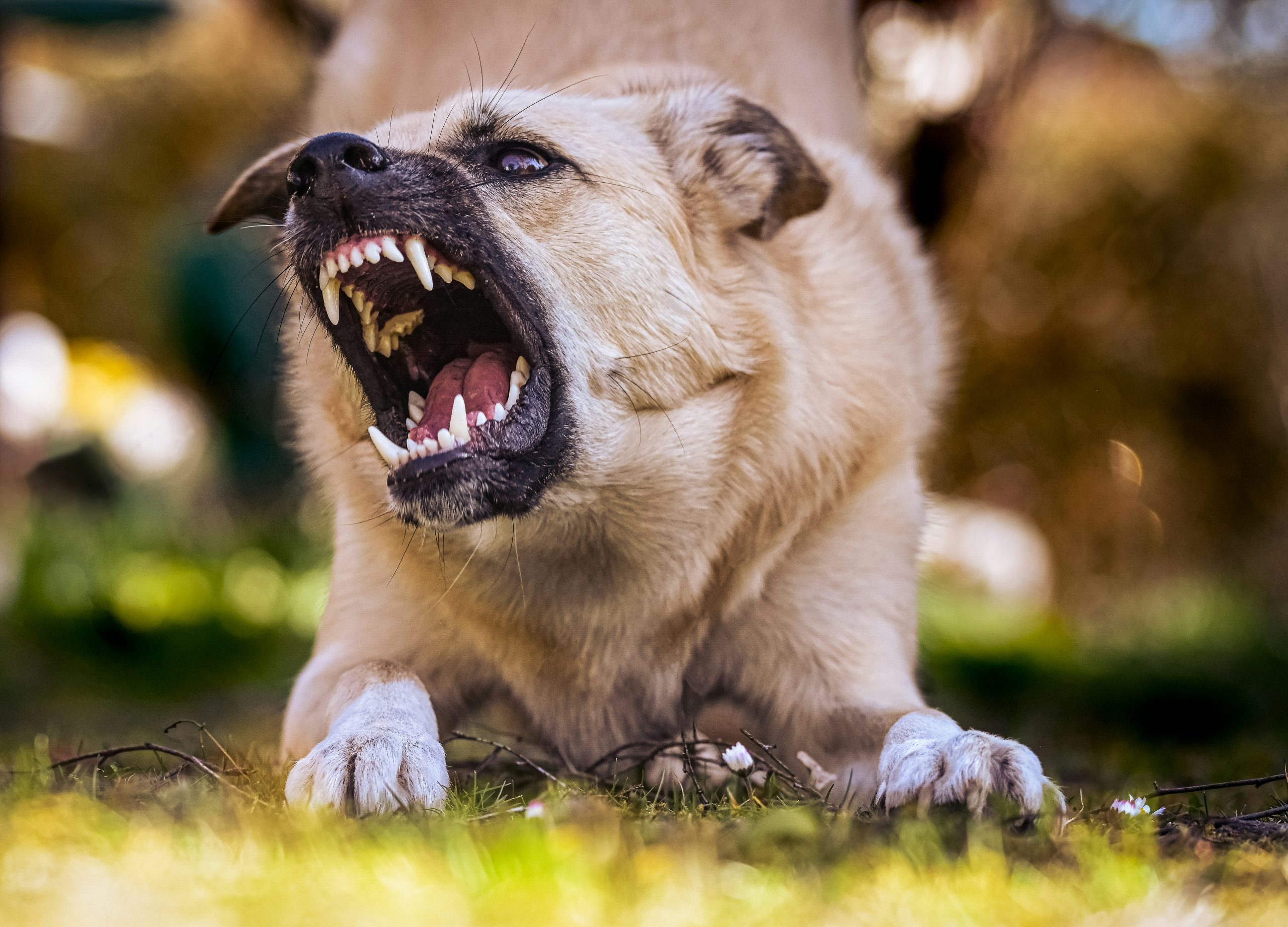
A young dog may be having the time of their life chasing your senior dog around the living room while your senior dog is trying to get away. This is not ideal nor is is something we should allow to continue.
Watch your dogs’ body language and what they do when they have the opportunity to disengage.
Does your older dog voluntarily return to play after taking a break? Do they initiate interactions? Do they look loose and happy?Or are they repeatedly trying to escape, hide, or disengage while the younger dog continues pursuing them?
You can help your younger dog learn skills that make these interactions easier for everyone.
One big skill I recommend working on when monitoring play is RECALL! This means teaching the dogs how to pause their play session and come to you when you call them. This can be used to help keep play sessions happy and enjoyed by everyone.
3. Give each dog 1:1 time to fill their cup
It’s easy to fall into the habit of doing everything with your dogs together. But in many households I work with, I notice a lot of benefit of doing separate activities with dogs, especially dogs of different ages.
Maybe your dogs have different interests in training and play. Maybe one enjoys 1:1 fetch or tug and would prefer to do this without your other dog nearby. Or maybe they really like training sessions. Training can be a lot easier to do with just 1 dog, especially at first when learning new behaviors.,
Maybe one dog loves learning tricks while the other would rather spend 20 minutes searching for treats in the backyard.
Make time for activities that are specifically designed for each individual dog.
One-on-one time can be especially valuable when dogs are at very different life stages because their interests and speeds often are different. Think about what makes each dog happy and fulfilled, then make sure they get opportunities to do those things.
4. Never force interaction or friendship
This may be the most important one that is a common misconception in our culture. Your dogs don’t have to be best friends. And they deserve to have their personal space for things like eating, bone chewing, and resting if they want it.
If one dog wants to walk away, let them.
If one dog doesn’t want to play, don’t allow the other dog to pester them and stress them out.
If your older dog wants to play for 10 minutes and then is ready for a nap, monitor this interaction and separate the dogs after the initial play session.
Baby gates, pens, crates, separate rooms, and other management tools can make this much easier and less stressful for everyone.
And it’s also okay if your dogs don’t seek out interaction with each other, or if they take a long time to form a relationship.
We sometimes put a lot of pressure on dogs to have the kind of friendship we imagine they should have.
A successful relationship between two dogs can look pretty boring from our perspective. They may spend most of their day doing their own thing, and occasionally choosing to hang out together.
That’s a perfectly good relationship.
If you want help improving the dynamics between your dogs of different ages at home, check out my services to see how we can work together!